Distinctive vertical integration - quality built on in-house expertise
Our distinctive level of vertical integration is one of the defining characteristics of heinrichschulte. Quality does not begin at the end of the manufacturing process. It starts with technical development and continues through tool and mould making, core production, foundry work, CNC machining, surface finishing and assembly to final inspection.
This close connection between manufacturing stages enables materials, processes and product quality to be monitored across key areas. Step by step, a raw material is transformed into a fitting designed for reliable functionality, careful workmanship and long-term use.
Our vertical integration is therefore more than a technical advantage. It is an essential part of our Value Proposition: Made in Germany, manufacturing expertise, responsibility and our guiding principle of Enkelfähigkeit – Thinking in Generations. From the initial technical concept to final testing, craftsmanship, modern manufacturing technology and the quality standards of a family-run company are closely connected.
In this way, water in motion becomes tangible throughout the manufacturing process. Development, materials, precision and control work together to make quality not only visible, but part of the everyday product experience.
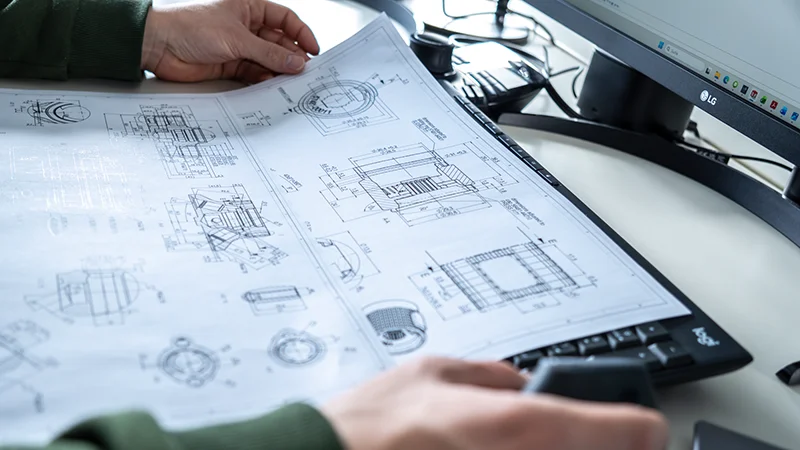
Technical Development
Every fitting begins with an idea that needs to function technically and meet the requirements of everyday use. During technical development, design, functionality and manufacturing expertise are brought together to form a concrete product concept.
Dimensions, water flow, ease of use and manufacturability are coordinated with one another. The heinrichschulte approach to quality therefore begins long before the finished product – with engineering, technical design and carefully considered details.
Mould Making
Mould making provides an essential foundation for producing cast components with a high degree of repeatability. The mould determines the shape of the subsequent raw body and influences how precisely and consistently a component can be manufactured.
This manufacturing stage combines craftsmanship with technical expertise. For heinrichschulte, in-house mould making is an important part of our vertical integration and our ability to manage key production stages within the company.

Finished Steel Casting Moulds
Finished casting and steel moulds transfer engineering specifications into series production. They need to close precisely, withstand the high temperatures of the casting process and support reproducible manufacturing conditions.
An important part of subsequent product quality is therefore determined even before the actual casting process begins. Precision in tool and mould making provides the foundation for the manufacturing stages that follow.

Sand Core Production
Core production creates the internal structures that later help determine water flow, functionality and the technical configuration of the fitting. Elements that remain invisible from the outside can therefore have a significant influence on how the finished product functions.
Experience, precision and careful manufacturing are essential at this stage. At heinrichschulte, core production demonstrates particularly clearly that product quality begins even in those areas of a fitting that will later remain hidden from view.

Foundry
In the foundry, liquid metal is transformed into the raw body of the future fitting. Knowledge of materials, defined processes and manufacturing experience come together as the metal is introduced into the prepared mould.
This stage combines industrial production with established specialist expertise. The material becomes the foundation for a fitting whose construction and subsequent processing are designed for reliable everyday use.

CNC Machining
Following casting, CNC machining gives the raw body its precise technical contours. Bores, connection surfaces and functional areas are machined to a high level of accuracy.
Every dimension and functional surface influences how the fitting can subsequently be assembled, operated and used. This manufacturing stage therefore represents technical precision and our commitment to producing defined quality characteristics with repeatable accuracy.

Grinding & Polishing
During grinding and polishing, the raw body develops its visible material and surface quality. Surfaces are processed, contours are refined and components are prepared for subsequent finishing.
This stage brings together craftsmanship, material expertise and a trained eye. Step by step, the technically machined raw body develops the visual foundation of the finished fitting.

Electroplating
In the electroplating process, carefully prepared surfaces are refined and provided with functional coatings. Electroplated finishes combine technical surface requirements with the desired visual appearance.
For heinrichschulte, in-house electroplating is a central element of our surface expertise and distinctive vertical integration. Preparation, coating and quality control can therefore be closely coordinated.

Powder Coating
Powder coating gives selected components a uniform surface with functional protective properties and a distinctive material appearance. The coating powder is applied under controlled conditions and subsequently heat-cured.
Precise process control, careful preparation and quality inspection support a defined coating result. This manufacturing stage therefore combines functional surface properties with design versatility and carries the heinrichschulte quality approach through to the finished surface.

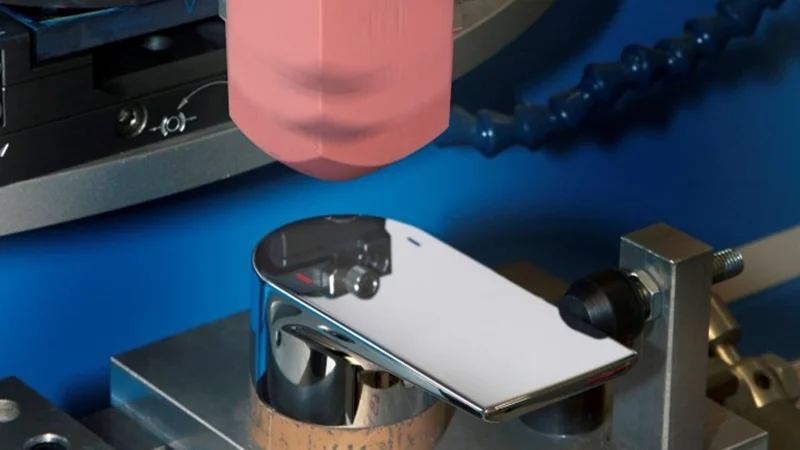
Pad Printing
Pad printing is used to position symbols, markings and logos precisely on the fitting. These markings support intuitive operation while also contributing to a consistent product appearance.
This comparatively small production stage also demonstrates that details at heinrichschulte are treated with the same care as the larger manufacturing processes.
Assembly
During assembly, the individual components come together to form the finished fitting. Bodies, cartridges, seals, connections and control elements are joined and coordinated according to their intended function.
This is where the results of the preceding development and manufacturing stages come together. Individual components become a complete product whose functionality, operation and workmanship are intended to meet the heinrichschulte quality standards.

Leak Testing and Quality Inspection
Every single fitting that leaves our factory is tested. Leak testing and quality inspection check defined requirements for functionality and workmanship before the product is released for further distribution.
Water should only flow where the product has been designed for it to flow. Function and leak tightness are therefore not simply assumed, but checked as part of defined inspection processes. Testing every individual fitting is an essential part of our approach to quality.

Packaging, Storage and Delivery
Our controlled processes continue after technical inspection. The finished fitting is prepared for transport, protected through appropriate packaging, stored and made ready for delivery.
Our commitment to quality therefore extends beyond the manufacturing process itself. Development, production and testing come together in a product prepared for its use in the bathroom or kitchen – as part of water in motion.

Master Data and BIM
At heinrichschulte, quality does not end with the physical product. Technical product information and digital data also form part of our value creation. Within master data management and PIM, technical specifications, product data, images, dimensions, finishes, spare parts, documents and sales-related information are maintained in a structured manner and made available across different channels.
This data foundation supports customer service, consultation and digital applications. Information on bathroom fittings, kitchen fittings, showers and concealed solutions can therefore be provided in a structured and consistent form for different applications.
As part of our value creation, this area strengthens the connection between development, manufacturing, sales and the market. Structured master data and BIM information make product information digitally traceable and extend the heinrichschulte quality approach beyond the physical product itself


